How to Use a Lemon Vibrator for Pleasure After Stopping Hormonal Medication
When you quit birth control, HRT, or antidepressants, your body needs time to recalibrate. Here's what changes and how lemon clitoral vibrators help you rebuild sensation.
Let's be real: when you stop taking hormonal birth control, HRT, or even certain antidepressants, your body doesn't just flip a switch back to baseline. It recalibrates. And that recalibration affects arousal, sensation, lubrication, and how quickly your nervous system responds to stimulation. For some people, sensation comes roaring back within weeks. For others, it takes months. Both are completely normal.
The disconnect most people feel isn't permanent. But it's also not something you fix by ignoring it and hoping it resolves on its own. Understanding what's actually happening physiologically helps you work with your body instead of against it.
Hormonal medications change sensation in three main ways. First, they suppress the hormones that trigger arousal and desire at the neural level. Estrogen and testosterone aren't just about fertility. They're signaling molecules that prime your nervous system for pleasure. When medication suppresses them, that primer gets quieter.
Second, hormonal medications reduce blood flow to genital tissue. Better blood flow means faster arousal response and more intense sensation. Suppress the hormones driving circulation, and everything feels more muted. It's not numbness exactly, but a kind of distance. Like you're experiencing pleasure through a pane of glass.
Third, some medications (particularly SSRIs and certain HRT formulations) suppress orgasm itself by raising the threshold for climax. You can still have an orgasm, but it takes longer to reach and feels less intense when it arrives. For many people, this disconnect from their body's responsiveness becomes as frustrating as the lack of desire itself.
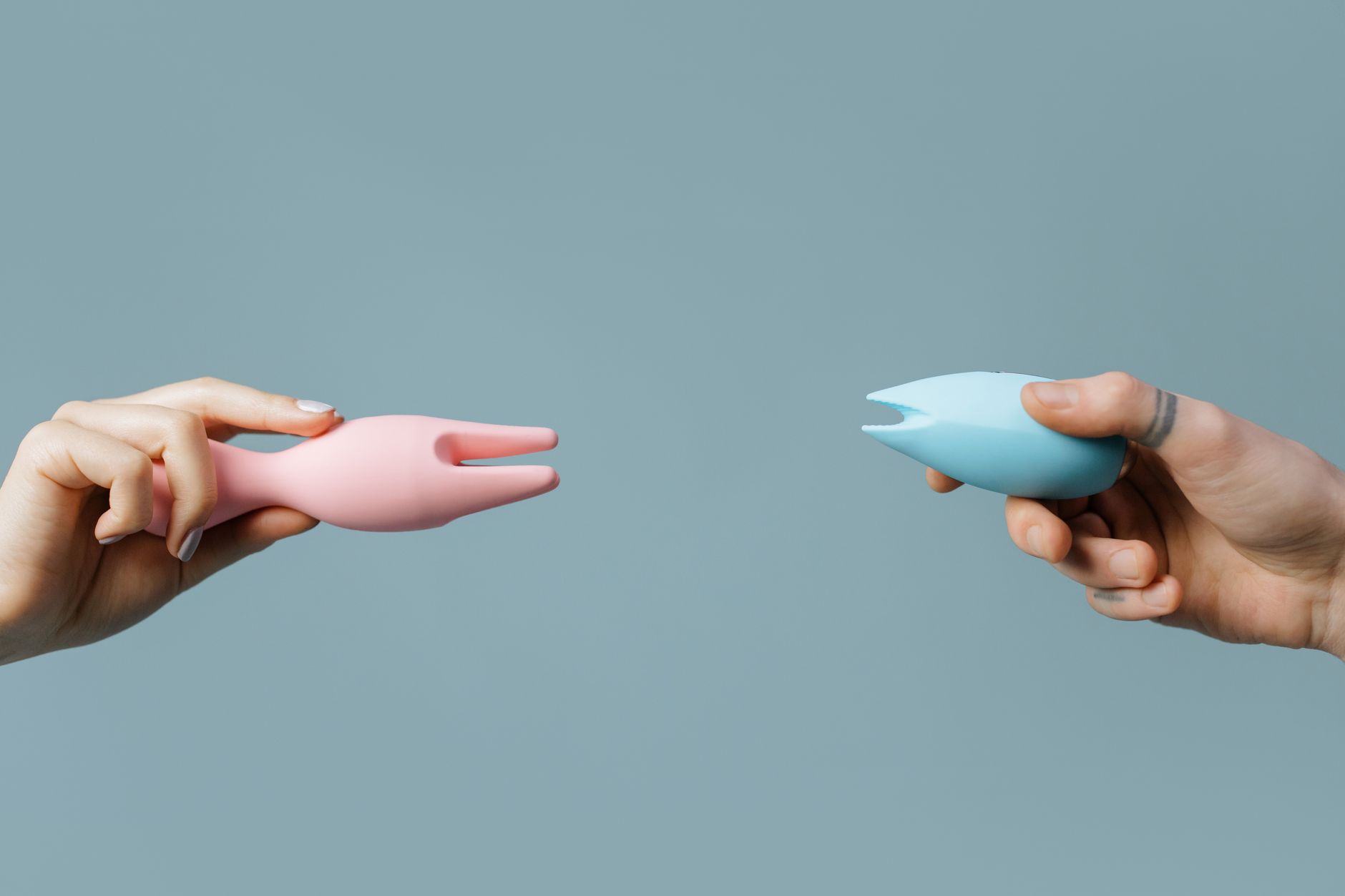
Here's where lemon clitoral vibrators come in. The Lem and other lemon-shaped suction toys work differently than traditional vibrators because suction engages more nerve endings across a broader tissue area.
Traditional vibration delivers stimulation through oscillation. It's focused, direct, and effective. But when your nervous system is in recalibration mode after stopping hormonal medication, that directness can feel overwhelming or numb in alternating waves. Suction feels more like constant stimulation with variable intensity. It mimics the sensation of oral sex, which engages more surface nerves and is harder to numb out from psychologically.
When you're rebuilding sensation after medication changes, suction tools give you three advantages. They require less direct pressure on delicate tissue, they engage a wider neural network, and they create a feedback loop where your body responds faster to stimulation. Basically, they give your recalibrating nervous system more to work with.
If you're just stopping hormonal birth control, expect real changes within 2-4 weeks as your natural hormone cycle returns. But full recalibration of arousal and orgasm often takes 8-12 weeks. Antidepressants are slower. When you stop SSRIs, sexual function usually improves within 2-3 weeks, but some people need 6-8 weeks to feel fully responsive again.
HRT transitions depend on what you're changing. If you're lowering your estrogen dose, expect 4-6 weeks of adjustment. If you're completely stopping HRT, it can take 3-4 months for your body to fully readjust to lower hormone levels.
During this window, patience matters more than expectations. Your body isn't broken. It's adapting. Using a lemon vibrator during this period helps because it gives you something responsive to work with while you're rebuilding confidence in your own sensation.
Start with lower suction settings. When your nervous system is recalibrating, high intensity can feel jarring rather than pleasurable. Begin on setting 1 or 2 with a lemon clitoral vibrator and spend 10-15 minutes just exploring. No pressure to orgasm. The goal is sensation gathering, not achievement.
Use water-based lubricant. After hormonal medication, tissue often feels drier and more sensitive. Lube doesn't just help physically. It signals to your nervous system that this is a safe, comfortable experience. That psychological shift matters as much as the physical one.
Budget longer sessions. When you're rebuilding arousal after medication changes, trying to rush creates frustration. Set aside 20-30 minutes and let your body take the time it needs. This isn't inefficiency. It's teaching your nervous system that pleasure isn't on a deadline.
Pay attention to what patterns feel good. During recalibration, your preferences might shift. Pressure that felt perfect on birth control might feel too intense now. Suction rhythms you ignored before might become your favorite. Keep notes. This information tells you something useful about how your body is rebalancing.
Here's the psychological piece that matters just as much as the physiological one. When sensation dulls during hormonal medication, most people interpret it as permanent. Then when you stop the medication and sensation doesn't immediately bounce back, that interpretation hardens into belief. You start telling yourself you've lost something you can't get back.
You haven't. But you need evidence to believe that. Using a lemon vibrator during the transition period gives you that evidence. Each time you feel something you didn't feel the day before, each time an orgasm arrives easier than it did last week, you get proof that your body is recalibrating. That proof builds confidence faster than any amount of reassurance.
If you have a partner, this is worth naming explicitly. "My body is relearning how to respond" is different than "my body is broken." The first one has a timeline and a direction. The second one sounds permanent. Help your partner understand the difference so they don't misinterpret the transition as disinterest in them.
If you stop hormonal medication and sensation doesn't improve at all after 3-4 months, talk to your doctor. Sometimes medication side effects are slow to resolve. Sometimes the underlying hormonal condition needs different treatment.
If you experience pain where you didn't before, that's also a signal to check in. Pain during pleasure often points to vaginal atrophy or other tissue changes that need clinical attention, not just a lemon vibrator fix.
And if mood, anxiety, or relationship dynamics shifted alongside the medication change, those affect arousal too. A good therapist or relationship counselor can help you separate physical sensation recovery from emotional adjustment. They're often intertwined.
Here's something nobody tells you: when sensation comes back after hormonal medication, it often feels sharper and more nuanced than it did before. Some people report that their most intense orgasms happen during the first few months after stopping hormonal birth control. Others find that without the hormonal suppression of arousal, desire returns with surprising intensity.
This doesn't happen for everyone. But it happens often enough that it's worth holding space for possibility rather than dread. Your body's recalibration isn't a loss. It's a transition. And transitions sometimes lead somewhere better than where you started.
Most people experience noticeable changes within 2-4 weeks as their natural hormone cycle returns. But full recalibration of arousal and orgasm typically takes 8-12 weeks. Everyone's timeline is different. Some people feel completely restored in 6 weeks. Others need 4-5 months. If sensation hasn't improved after 12 weeks, check in with your doctor.
Yes. Lemon clitoral vibrators use suction instead of vibration, which engages more surface nerves and typically creates a faster arousal response. This can help shorten the time to orgasm and make climax feel more intense. Combine it with patience and lower-pressure sessions, and most people see improvement within 2-3 weeks.
Not exactly. SSRIs typically affect orgasm ability and desire simultaneously. When you stop SSRIs, desire usually improves faster than orgasm capacity. Expect 2-3 weeks for arousal to return noticeably and 6-8 weeks for full orgasm function. A lemon vibrator helps during this period by giving you responsive feedback as your system recalibrates.
Use it as a conversation starter. "I'm rebuilding sensation after my body adjusted to medication changes. This helps me feel what's working and what isn't. It's not about you or about anything missing in our connection. It's about me gathering information about my own body." Most partners respond better to honesty than to secrecy. And transparency often invites them into the process rather than making them feel excluded.
Completely normal. After hormonal medication, orgasms sometimes feel more localized, sometimes more intense, sometimes take longer to build. These differences are your nervous system recalibrating. Use lemon vibrators at lower intensities to let that recalibration happen gradually rather than shock your system with high intensity right away.
Yes. In fact, using lemon clitoral vibrators while still on medication can help you understand your baseline sensation and what changes when you stop. It also gives you a tool you already trust before you're navigating medication adjustment. Think of it as familiarizing yourself with the landscape before the terrain shifts.
Medication transitions reshape sensation, sometimes dramatically. But reshape isn't the same as permanent change. Your body isn't broken. It's reorganizing. Lemon clitoral vibrators help you stay connected to yourself while that reorganization happens, gather information about what's working, and rebuild confidence in your own responsiveness. That combination of physical and psychological support is what actually accelerates recovery.
If you're navigating this transition right now, know that what you're feeling is real and temporary. Your pleasure will return. It just needs time and tools and patience. A lemon vibrator is one of the best tools for that specific journey.
Have questions about your specific situation? We're here to help. Reach out anytime.