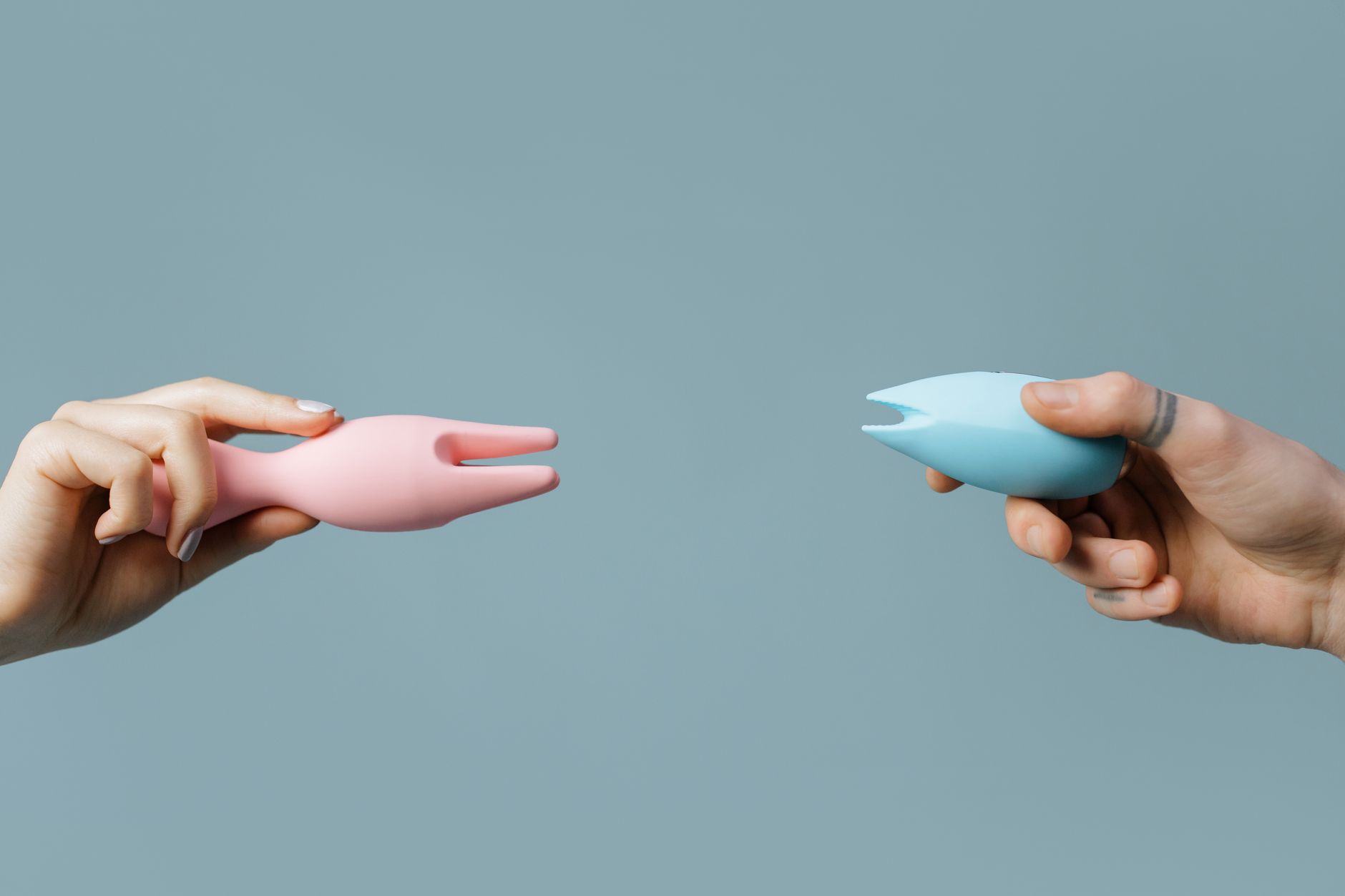
How to Use a Lemon Vibrator Safely When You Have Numbness or Reduced Sensation
Numbness during stimulation kills the moment. Here's why it happens, how to wake your nerves back up, and how to use your clitoral vibrator without losing sensation halfway through.
You're using your lemon vibrator. Things feel good. Then, somewhere between minute three and minute seven, the sensation flattens. It's like someone turned down the volume on your body. The vibrator is still buzzing. Your clitoris is still there. But the pleasure just.stops.answering.
Your clitoris has about eight thousand nerve endings concentrated in a space smaller than a pea. That density is why even light touch can feel intense. But that same density means those nerves can get overwhelmed. Continuous vibration, especially at high intensity, numbs sensation the same way your leg goes numb if you sit on it too long.
This isn't a sign your lemon vibrator isn't working. It's a sign your nervous system is protecting itself. After sustained stimulation, the nerve receptors literally stop firing as frequently. This is called neural adaptation, and it happens to everyone. The good news: it's reversible, and understanding it gives you total control over your pleasure.
Three things make numbness worse: high intensity from the start, using the same pattern continuously, and skipping breaks entirely. The lemon clitoral vibrator, by design, delivers intense suction stimulation that can trigger this faster than other tools if you're not intentional about pacing.
Instead of staying on one intensity level, I recommend what I call the "wave technique." Start at pattern one or two on your lem vibrator. Spend two to three minutes there. When sensation starts to soften (you'll feel the slight dullness), switch to a different pattern. Not a higher one. A different one.
Your nerves don't adapt to variety the same way they adapt to repetition. By rotating patterns every few minutes, you keep the sensation fresh without needing to crank the intensity. Most people find they reach orgasm faster this way, not slower, because they're not fighting numbness.
When numbness starts, your instinct is often to turn the intensity up. This backfires. Higher intensity on numb tissue creates a dead feeling. Instead, switching patterns reawakens the same nerves you were just using. It's like changing the radio station instead of turning up the volume.
The easiest prevention is rest. I tell clients: aim for thirty seconds of no stimulation every three to four minutes. This isn't a failure. It's strategy. During those rest windows, sensation comes roaring back. You'll literally feel the blood returning to your clitoris, and the next pattern hits completely differently.
Use the rest time to touch yourself elsewhere. Your inner thighs, your breasts, your whole vulva. Pleasure isn't a line to one destination. It's a whole-body experience. When you return to your lemon vibrator, you're not just waking up your clitoris. You're also bringing your whole nervous system back into the game.
Here's the thing that surprises most people: starting at high intensity makes numbness worse, not better. If you begin at pattern five or six, your nerves are already overwhelmed. By minute five, sensation is gone. But if you start at pattern two, you might sustain feeling all the way through.
This feels counterintuitive. Shouldn't higher intensity feel better? Not always. Pleasure is not linear. Sometimes lower intensity for longer, with pattern changes, creates more satisfying sensation than high intensity that numbs out halfway through.
Try this: next time, start at the lowest pattern that still registers as pleasurable. Stay there for at least five minutes. Let your body warm up. Your arousal level, your breathing, your whole system works together. When you give it time to sync up, numbness is less likely to show up at all.
Numbness isn't always neural. Sometimes it's mechanical. If your tissue is dry, the suction from a clitoral vibrator can create friction that actually numbs sensation through irritation. Adding water-based lubricant changes everything. Not just comfort. The glide reduces friction, which reduces the inflammatory response that kills feeling.
Same thing if your tissue is thinner or more sensitive. Estrogen shifts, pelvic floor tension, even stress hormones affect tissue quality. If numbness started recently, and nothing else changed, tissue changes might be the culprit. A small amount of lube (and I mean small—you don't need much) often restores sensation immediately.
Sometimes the answer is stepping back for a few days. If numbness persists even with pattern switching and rest cycles, your clitoris might need recovery time. This is especially true if you're using your lemon sexual toy daily, or multiple times per day.
Using other types of stimulation helps. Manual touch, a different kind of toy, partner play. Variety gives your clitoris time to reset while you're still exploring pleasure. Come back to your lem vibrator after two or three days. Sensation usually returns stronger than before.
Some medications flatten sensation. SSRIs, certain blood pressure drugs, and even some antihistamines can affect clitoral feeling. If numbness is new and you started a medication around the same time, mention it to your doctor. There are often alternatives that don't have this side effect.
Hormonal shifts matter too. Certain phases of your cycle, changes in birth control, or hormonal shifts in midlife can change how your clitoris responds to vibration. This isn't permanent. But recognizing the pattern helps. You might find numbness is worse in certain weeks, which means planning your toy use around your cycle makes sense.
If you're using your lemon vibrator with a partner, numbness can feel like rejection. "Does this not feel good?" or "Do you not want me?" Stop that story right now. Numbness is a nervous system response, not a reflection of desire or connection.
Honestly tell your partner: "My clitoris goes numb after a few minutes with high stimulation. It's not you. It's how my nerves work. Here's what helps." Then show them. Pattern switching, rest cycles, lube. When your partner understands it's a technique issue, not a desire issue, they usually feel relieved. You're not rejecting them. You're solving a puzzle together.
Lemon vibrators use air-suction technology that delivers very concentrated stimulation to a small area. This intensity is what makes them so effective, but it also means you hit neural adaptation faster. The pattern-switching technique in this post is specifically designed for lemon suckers because of this. You're not using the tool wrong. You just need a strategy that matches the tool's power level.
No. Clitoral numbness during use is temporary neural adaptation, not permanent damage. Once you stop the stimulation, sensation returns. Usually within minutes. If numbness persists hours after you stop using your lemon sexual toy, or if sensation doesn't return at all, check with a pelvic health provider. That's different and worth exploring with a professional.
Sort of. You can't prevent neural adaptation entirely. But you can minimize it by using lower starting intensity, switching patterns frequently, and taking rest breaks. The goal isn't to eliminate numbness. It's to work with your body's natural protective response instead of fighting it. Most people find they actually enjoy pleasure more when they stop trying to push through numbness and start using techniques that prevent it.
Not necessarily. Daily use is fine if you're strategic. The people who struggle with numbness are usually the ones using high intensity continuously. If you use lower intensity, switch patterns, and take breaks, you can use your lem vibrator daily without numbness becoming a problem. It's about technique, not frequency.
Yes. Start at the lowest pattern tomorrow and spend at least five minutes there before increasing. Let your arousal build slowly. Sensation usually comes roaring back within a few days of using lower intensity. You might be surprised how good lower patterns feel once your body isn't in protective shutdown mode.
That's usually performance anxiety or overthinking. The pressure to come on someone else's timeline tightens your nervous system, which actually increases numbness. The fix: slow down, focus on sensation rather than outcome, and give yourself permission to enjoy the process without a destination. Your partner can help by removing the pressure. "I'm just here to make you feel good, whenever that happens" is wildly more effective than "Come on, you're almost there."
Here's what I want you to understand. Numbness isn't a failure. It's feedback. Your body is saying: "Hey, this intensity for this duration isn't working for my nervous system." That information is gold. Most people spend years fighting their body's signals instead of listening to them.
When you learn to work with numbness instead of against it, something shifts. You start using your lemon vibrator more intentionally. You discover that pattern one can feel incredible. You learn that rest and variety matter more than intensity. You stop chasing sensation and start creating it.
That's when pleasure actually deepens. Not because your body changed. Because you learned its language.
If numbness persists despite pattern changes and rest breaks, or if sensation doesn't return within an hour of stopping, reach out to a pelvic health specialist. There are other things that can affect clitoral sensation—tension, inflammation, nerve involvement—and those are worth professional support. You deserve to feel everything your lemon vibrator can offer. If something's off, get help.