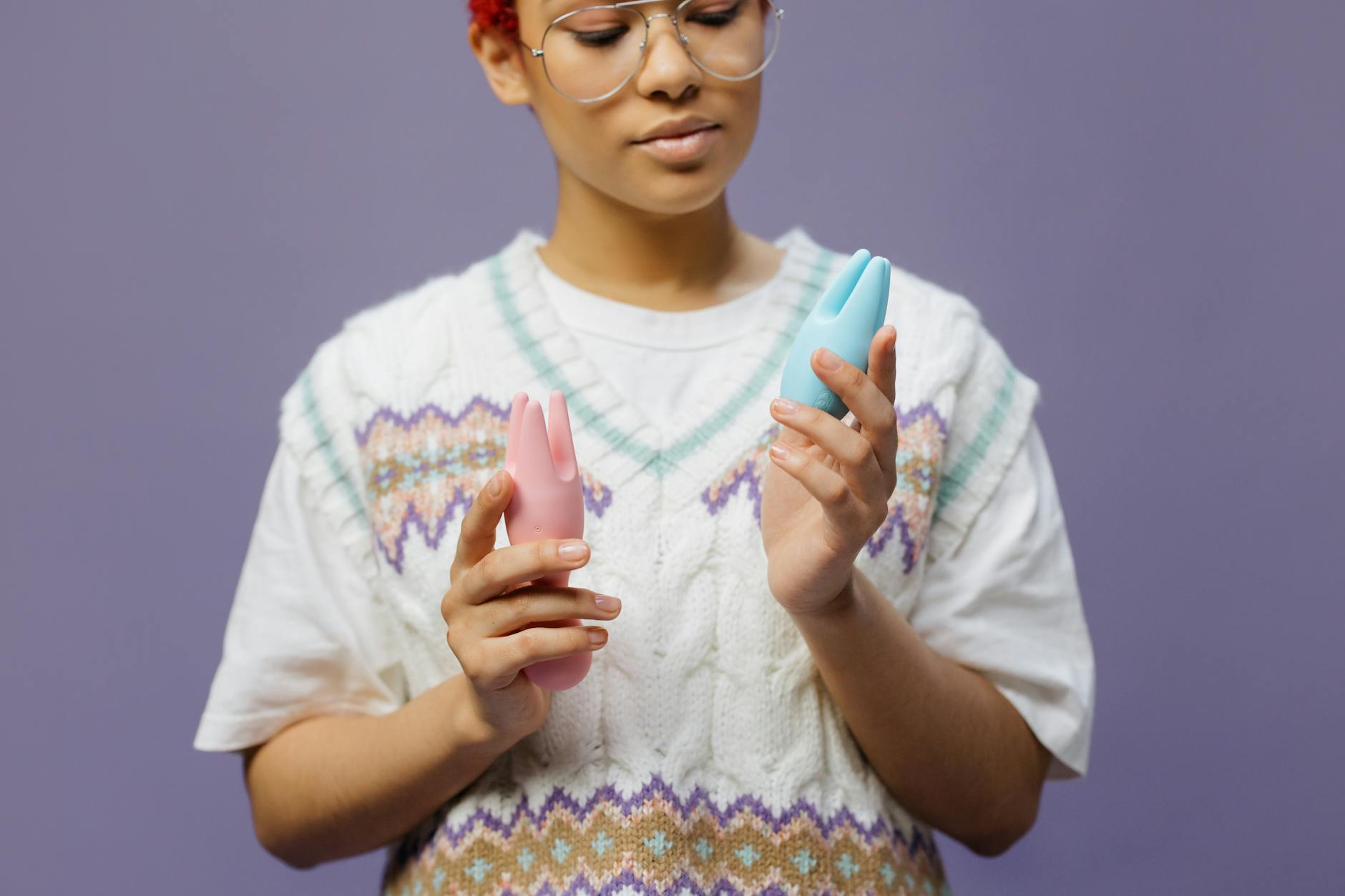
Why Lemon Vibrators Require Different Settings for Each Body Stage
Your pleasure blueprint shifts throughout your cycle and across decades. Here's how to recalibrate your lemon clitoral vibrator settings so you feel incredible every single time.
You bought a lemon vibrator. It felt amazing the first three times. Then one week it felt too intense, the next week it barely registered, and last month it was perfect again. You started wondering if something was broken. Spoiler: it's not the vibrator. It's your body doing exactly what it's supposed to do.
Most people treat their lemon clitoral vibrator like a light switch: on or off, high or low, always the same. But your sensitivity, arousal speed, and pleasure response change constantly. Hormones shift. Your nervous system cycles. Age changes tissue resilience. A settings chart that works in January won't work in March. Understanding why takes the shame out of "why doesn't this feel as good today" and puts you back in control.
I work with couples navigating this all the time. The frustration isn't actually about the toy. It's about expecting static pleasure from a dynamic body.
If you menstruate, your clitoral sensitivity swings dramatically across 28 days. This isn't psychological. It's measurable.
During your follicular phase (period through ovulation), estrogen rises. Blood flow to your genitals increases. Nerve sensitivity actually increases too. This is why people often report that vibrators feel more intense mid-cycle than they do during other weeks. Many of my clients find that patterns 4-6 on a lemon vibrator during ovulation feel about right, when pattern 2-3 during their period is actually plenty.
The luteal phase (after ovulation until your period) is different. Progesterone rises, and clitoral sensitivity typically decreases. You might need to bump up to pattern 5 or 6 to get the same sensation. Some people find the suction-based technology of devices like the Lem actually works better during this phase because it doesn't rely on raw vibration intensity.
During menstruation itself, blood volume in your pelvic region peaks, which can make the clitoris feel fuller and slightly less sensitive to light touch. You might want to start at pattern 3 instead of pattern 1. The good news: many people also report more intense orgasms during their period, partly because of increased pelvic blood flow.
The practical fix: take 30 seconds before you start and ask yourself where you are in your cycle. Not as a mood forecast, but as a settings guide. It removes the guesswork.
If you take birth control pills, the patch, or the ring, your cycle flattens. Hormonal fluctuations shrink. This sounds like it would make things easier, but it creates a different problem: you lose the cycle cues that tell you to shift settings.
What actually happens is nuanced. Some people find consistent sensitivity across the month for the first time (meaning you can lock in one setting and stick with it). Others experience dampened arousal overall, which is a known side effect of hormonal birth control for about 10-15% of users. If this is you, the solution isn't necessarily to stop the pill. It's to recalibrate settings lower and plan for longer warm-up time.
IUD users (both hormonal and copper) report different experiences. Copper IUDs don't suppress hormones, so your cycle still drives sensitivity shifts. Hormonal IUDs release a tiny, localized dose of progestin, which some people barely notice and others find dampens clitoral response slightly. Neither is "better." They just require different awareness.
The takeaway: if you switch contraception, give yourself a week to recalibrate your vibrator settings. What worked on the pill might need adjustment with an IUD. That's normal.
Here's the part that surprises people most: your nervous system state matters more than your hormones.
When you're in a calm, parasympathetic state (rest and digest), your clitoris is more sensitive. Blood flows to your genitals more easily. Arousal builds faster. Pattern 2-3 on a lemon vibrator might be all you need.
When you're stressed or activated (fight-or-flight), your clitoris actually becomes less sensitive. This is evolutionary. Your body prioritizes blood flow to large muscles, not pleasure organs. You'll need higher intensity, longer warm-up, and way more mental settling before you can get there. This is why anxious partners often think something is wrong with them when really they just need to calm their nervous system first.
The same is true if you're in your head. Even with zero external stress, if you're thinking about your to-do list or worrying about being too loud, your nervous system stays slightly activated. You need a higher setting than you would if you'd just done 10 minutes of breathing or stretching.
This is worth testing intentionally. Try using your lemon vibrator at the same time of day, in the same cycle phase, but with and without 10 minutes of calm breathing first. Most people report needing to drop 1-2 settings when they arrive relaxed versus when they're braced.
Evelyn here, speaking plainly: yes, clitoral tissue changes with age. Estrogen drops after menopause. Tissue thins slightly. Arousal takes longer to build.
But here's what your doctor probably won't emphasize: many people report some of the most intense orgasms of their lives after 45. Why? Because the clitoris doesn't lose sensation. It consolidates. Nerve endings rewire. Distraction and social pressure drop away. You're often more present than you were at 25.
Settings-wise, you might find you need pattern 5-6 consistently where you used pattern 3-4 in your thirties. That's not a loss. That's data. Adjust accordingly. The lemon clitoral vibrator technology actually handles this really well because suction is gentler on thinner tissue than vibration alone, while still delivering serious intensity.
One thing that does change: arousal time increases. Budget 20-30 minutes instead of 10. That's not about being broken. It's about the physiology of how blood flow works in a body with less circulating estrogen. Plan for it. It's not a problem once you stop expecting the same speedboat response you had at 28.
Antihistamines, decongestants, SSRIs, blood pressure meds, and antihistamines all affect genital blood flow and nerve responsiveness. If you started a new medication and suddenly your usual settings feel wrong, that's probably why.
SSRIs (common for anxiety and depression) are notorious for slightly dampening clitoral response in some people. If this is you, a simple fix is often bumping up one or two patterns on your vibrator. Some people also find that timing helps. Taking your dose at night means it's metabolizing during the day when you're typically less interested in masturbating anyway, and might be metabolizing more lightly by evening when you are.
Antihistamines and decongestants shrink blood vessels. Less blood flow to your genitals means less sensitivity. If you take these regularly for allergies or congestion, expect to need slightly higher intensity, especially when you're actively congested.
None of this means you should stop your medication. It means you should know why your vibrator feels different and adjust without frustration.
Pick one specific condition: same time of day, same cycle day, same nervous system state (ideally calm). Try all six patterns on your lemon vibrator for 30 seconds each, starting at pattern 1. Note which pattern feels best. Do this twice a month: once mid-cycle and once in your luteal phase, or on days 1, 7, 14, 21 if you don't menstruate.
Within two cycles, you'll have your answer. You might find you need pattern 3 during one phase and pattern 5 during another. Or you might find that calm-state you only need pattern 2, but stressed-state you need pattern 4. This isn't failure. It's your pleasure blueprint.
Keep a note on your phone (yes, really). Something simple: "Cycle day 16: pattern 4 felt perfect" or "Post-coffee, on day 3: needed pattern 6." In three months you'll have patterns that actually work, not a vibrator you're fighting.
Your body isn't static. Your settings shouldn't be either.
When you can use a lemon vibrator with your partner, communicating what feels good right now (not what felt good last month) changes everything. Same when you're solo. You're not being fussy. You're being responsive.
If you're navigating pleasure after a major physical change like rebuilding after pelvic floor dysfunction, the settings map becomes even more crucial. Your sensitivity is genuinely different than it was pre-injury, and your vibrator can be calibrated to match that new reality perfectly.
The fact that your needs shift isn't a flaw in you or the toy. It's proof that you're paying attention to your body.
Your clitoral sensitivity genuinely changes based on your cycle phase, hormone levels, stress state, and medications you're taking. It's not the toy. It's your body's normal variation. Most people don't realize sensitivity fluctuates as much as it does until they start tracking it. Tracking pattern preferences across your cycle (or just across weeks) helps you realize the vibrator isn't broken. Your settings just need updating.
You can, but you'll probably feel like you're either overworking the vibrator on some days or undershooting on others. Many people find that dropping 1-2 settings during their period and follicular phase, then bumping up during their luteal phase, matches their actual sensitivity. If you're on hormonal birth control, your sensitivity stays more stable, so you might truly stick with one setting all month.
Completely. When your nervous system is activated (stressed or anxious), blood flow prioritizes large muscle groups over pleasure organs. Your clitoris becomes less sensitive, arousal takes longer, and you'll need higher intensity to feel the same sensation. This is why people often feel like they "can't come" when they're anxious. It's not psychological failure. It's physiology. Calming your nervous system first (via breathing, stretching, or just sitting quietly) makes a massive difference in how responsive you feel.
Give yourself two weeks to adjust. Birth control changes your hormone profile, which affects clitoral blood flow and sensitivity. You might find you need slightly higher intensity, or you might find your sensitivity stabilizes in a way you actually prefer. If after two weeks the settings still feel wrong, your body might be one of the small percentage for whom hormonal birth control dampens arousal. Talk to your prescriber. There are other options that don't have the same effect on some people.
Yes. Estrogen drops with age, tissue composition changes, and nerve responsiveness shifts. What's beautiful is that many people find their orgasms actually intensify even though the journey takes longer. You might need pattern 5-6 at 50 when you used pattern 3 at 30, and that's completely normal. Adjust your expectations for warm-up time too. Budget 20-30 minutes instead of 10. A lemon clitoral vibrator designed with suction technology often works beautifully for age-related sensitivity changes because it delivers intensity without harsh vibration.
Yes, because different vibrators have different intensity profiles. A suction-based vibrator like the Lem delivers very different sensations than a traditional bullet vibrator, even if both have six settings. The Lem's pattern 3 might feel more intense than another device's pattern 4, depending on the suction pressure and vibration frequency. When you switch devices, treat it like a new baseline and spend a few sessions figuring out which setting actually matches your preference.
Your body isn't inconsistent. It's responsive. The best lemon vibrator users aren't the ones who found one magic setting and stuck with it. They're the ones who learned to read their body's signals and adjusted accordingly. That's not complicated. It's just information. Once you have it, everything feels better.
If you want to talk through what's working and what isn't, reach out to our team. We're here to help you figure out your actual pleasure blueprint.
Brotto, L. A., & Basson, R. (2014). "Group therapy for women with sexual dysfunction." Journal of Sex & Marital Therapy, 40(6), 578-594.
Wallen, K., & Lloyd, E. A. (2011). "Female sexual arousal: Genital anatomy and orgasm in intercourse." Hormones and Behavior, 59(5), 780-792.
Traish, A. M., & Goldstein, I. (2005). "Sex hormone-dependent alterations in the phenotype of the human cavernosal smooth muscle." Journal of Andrology, 21(6), 884-891.
Palmer, J. B., & Ouellette, M. (2014). "The sexually responsive clitoris: A review of the evidence." Sexual Medicine Reviews, 2(4), 307-312.