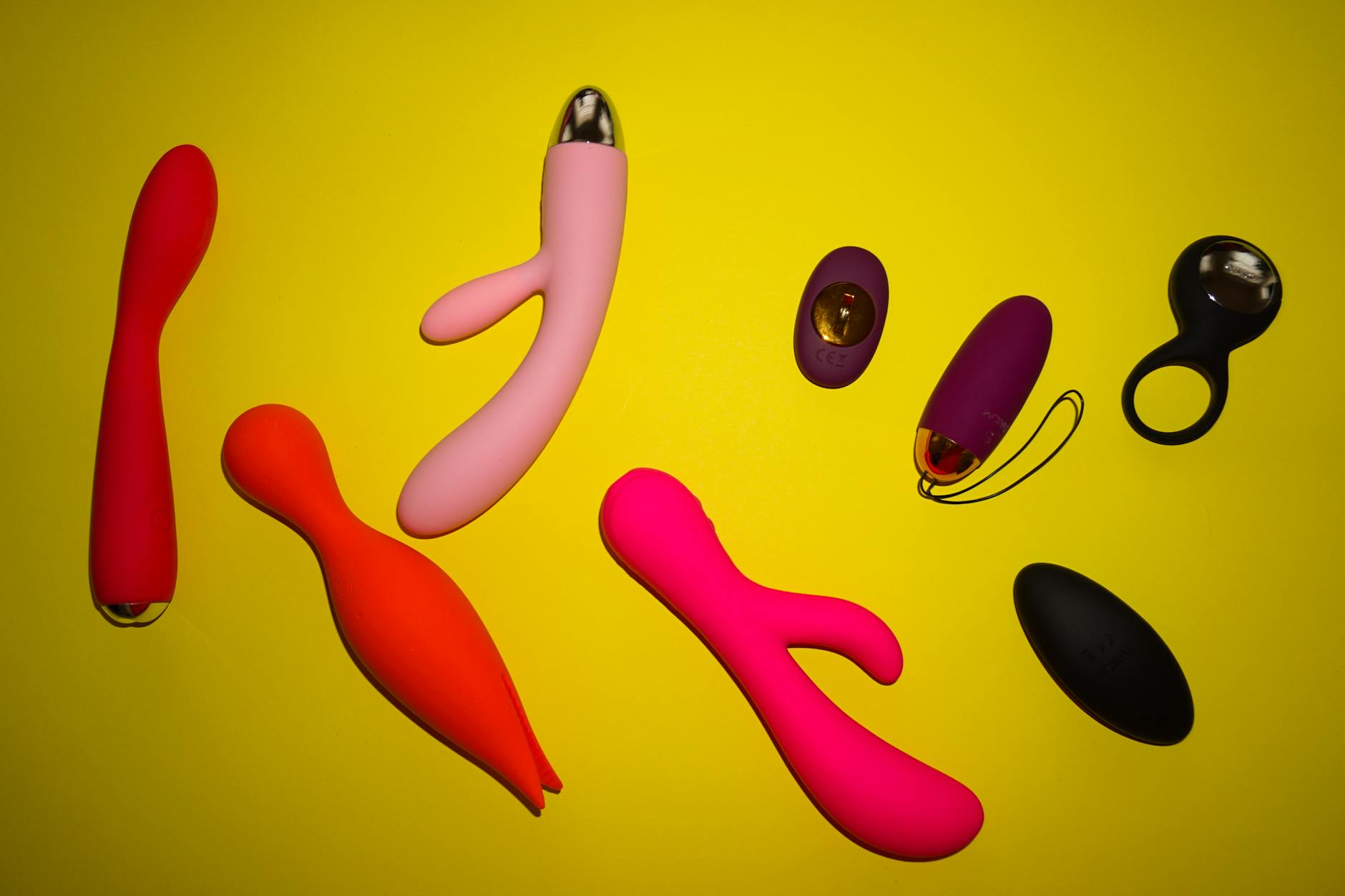
How to Use a Lemon Clitoral Vibrator When Sensation Feels Muted or Distant
When pleasure feels like you're watching it happen to someone else, a lemon vibrator designed with suction can reconnect you to real sensation. Here's the roadmap.
Here's what numbness actually is in a pleasure context. It's not that you've lost the ability to feel. It's that what you're feeling is arriving with a muffled quality, like you're experiencing it through several layers of glass. You know something's happening. You're just not inside it.
This happens more than you'd think. Chronic stress does it. Dissociation does it. Relationship distance, medication shifts, grief that's gotten very quiet. And yes, sometimes it's just your nervous system asking for something different than what you've been offering it.
The reason a lemon vibrator specifically helps is that suction creates a different neural pattern than traditional vibration. It's a pulling sensation rather than a buzzing one. For people with muted sensation, that distinction can be the difference between feeling like an observer and actually being present in your own body.
Your nervous system has a bandwidth problem. When you're in a sustained state of low-level threat, your brain limits what it lets you feel. This is protective in a crisis. But when the crisis becomes the baseline, your pleasure centers get dim.
Dissociation specifically disconnects your mind from your body as a coping mechanism. You're safe, but your nervous system hasn't caught up to that knowledge yet. Pleasure becomes something that happens in the distance.
Medication can do this too. SSRIs, anti-anxiety medication, even blood pressure meds can create a flattening effect. Your emotions feel less vivid. Your physical sensations follow. The answer isn't always to change medication. Sometimes it's to change your approach to sensation itself.
Stress hormones like cortisol have a direct suppressing effect on pleasure hormones like dopamine. When your cortisol is high and sustained, dopamine gets quieter. You still have the biological capacity for pleasure. You just have to call it in more intentionally.
A traditional clitoral vibrator works through sustained buzzing. It's fast, it's consistent, it's effective for people whose nervous systems are primed to receive it.
But if your nervous system is already in a state of protective numbness, that constant vibration can feel distant or even irritating. It's like knocking on a door that's closed. The knock lands, but nobody's answering.
Suction does something different. It creates a pulsing pressure that mimics the sensation of manual stimulation. That pulling quality is closer to what your body recognizes as pleasure from partnered touch. For people experiencing dissociation or muted sensation, that familiarity can be the bridge back.
The lemon vibrator uses air-pulse technology specifically designed to create that suction sensation. You're not getting constant vibration. You're getting a rhythmic squeeze. That rhythm gives your nervous system something to lock onto, something that feels like dialogue instead of monologue.
This is the part people skip, and it's the most important part.
If you're using a lemon vibrator specifically because sensation feels distant, you need to warm up your nervous system first. Not just your body. Your nervous system.
Spend 10 to 15 minutes doing something that brings you into the present moment. A bath where you're actually noticing the temperature. A walk where you're listening to actual sounds instead of a podcast. Meditation where you're tracking your breath. Gentle stretching where you're feeling where you're tight.
The goal is to shift from observer mode to inhabit-er mode. You're teaching your brain that it's safe to be present. That sensations coming in are safe to feel.
Then, before you touch yourself with the lemon vibrator, do some manual touching. Stroke your inner thighs. Run your hands over your belly. Spend time on your vulva without vibration. Get your body used to the idea that touch is incoming and that you're present for it.
This isn't foreplay in the traditional sense. It's nervous system calibration. You're reminding your body that feeling is safe.
Start low. The Lem has multiple intensity settings for exactly this reason. If you're coming into this with muted sensation, you want to start at pattern 1 or 2, not jump to intensity 4.
Approach your clitoris slowly. Don't go straight to direct contact. Place the lemon vibrator on your inner thigh first, on the sensitive skin there. Notice what that feels like. Does it feel warm? Pressure-y? Does it create any response in your body?
Move to your labia majora next. The outer lips. Again, notice. You're not trying to achieve anything yet. You're building a map of sensation.
When you do bring the lemon vibrator to your clitoris, angle it slightly so you're getting suction rather than direct frontal pressure. The angle matters. Direct contact can feel too intense or too numb at the same time, which is maddening. Angle creates variation, and variation is what wakes up muted sensation.
Stay there. Not moving. Let the suction work. The whole point is presence, not achievement. If you start thinking about orgasm, you're back in observer mode. Come back to what your body is feeling right now.
That's normal. Your nervous system might need several sessions of presence before it believes that feeling is safe again.
Don't increase intensity. That's the instinct, and it's backward. If you don't feel much at low intensity, cranking it up won't help. You're not broken. Your nervous system just doesn't trust yet.
Instead, go longer. Spend 20 minutes at low intensity instead of 10 minutes at higher intensity. Build a sustained period of presence. Let your body learn that it can be present without consequence.
Many people find that sensation returns gradually over multiple sessions. The first time, maybe you notice 20 percent. The third time, 50 percent. By the fifth time, you're back. This isn't a failure. This is your nervous system recalibrating.
If sensation hasn't shifted after 2 to 3 weeks of consistent practice, it's worth talking to a partner if you have one, or revisiting whether there's another piece of the puzzle. How to Use a Lemon Vibrator When You Feel Numb or Disconnected From Pleasure has some additional angles on persistent numbness.
A lemon vibrator is a tool. It's not a solution by itself.
If sensation feels muted because of relationship distance, the vibrator can help you remember what pleasure feels like solo, but you and your partner still need to do the reconnection work. That's a different conversation.
If sensation feels muted because of stress, the vibrator can help you practice presence, but you also need to actually reduce stress in your life. More sleep. Less doom-scrolling. Actual boundary-setting with people and commitments that are draining you.
If you're on medication that's flattening sensation, talk to your prescriber. There are often alternative medications or dose adjustments that work equally well without that side effect.
Use the lemon vibrator in concert with whatever else you need. It's one tool in the toolbox, not the entire toolbox.
The suction technology behind the lemon clitoral vibrator mimics the sensation of manual stimulation in a way traditional vibrators don't. Your body recognizes that. Your nervous system says "oh, okay, this is familiar."
That familiarity is the gateway back to presence. Once your nervous system stops being suspicious, sensation returns. The numbness lifts. You stop being an observer and start being a participant.
There's also something about the intentional, slow approach that heals. You're not goal-oriented. You're not trying to get somewhere. You're just being with sensation as it arrives. That's the opposite of how stress and dissociation work, and it's genuinely therapeutic.
Yes. Because suction creates a different neural pathway than vibration, it can interrupt the dissociative pattern. Your body recognizes the pulling sensation as familiar. That helps bring your mind back into your body. Start at low intensity and focus on presence rather than outcome. The goal is to build safety, not to force sensation.
There's no standard timeline. Some people notice a shift in one or two sessions. Others take 3 to 4 weeks of consistent practice. Your nervous system is learning that it's safe to feel again. That's a process, not a switch. Patience matters more than pushing.
Not necessarily. Temporary numbness during stress is normal. But if it's persistent across weeks or months, or if it's paired with other dissociative experiences, talking to a therapist makes sense. A lemon vibrator can help you practice presence. A therapist can help you understand what your nervous system is protecting you from.
Start solo. When sensation is muted, you need to focus entirely on what you're feeling without the added variable of another person's presence or expectations. Once you've rebuilt some sensation on your own, bringing a partner into that experience becomes easier and more connected.
Start without the suction function on. Just the gentle contact with your vulva, no vibration, no pulse. Get your body used to that. Then try the lowest setting. Your nervous system might need to rebuild trust in very small steps. That's completely valid.
Yes. Some medications flatten sensation as a side effect. The lemon vibrator can still help, but you might need longer warmup time and lower intensity settings. If you're on medication that's affecting pleasure, it's worth discussing with your prescriber whether alternatives exist. A lemon vibrator is a complement to addressing the root cause, not a replacement for it.
Sensation returning isn't magic. It's your nervous system learning that it's safe to feel again. A lemon vibrator designed with suction technology can be that permission slip. Start slow. Stay present. Let it take the time it needs.