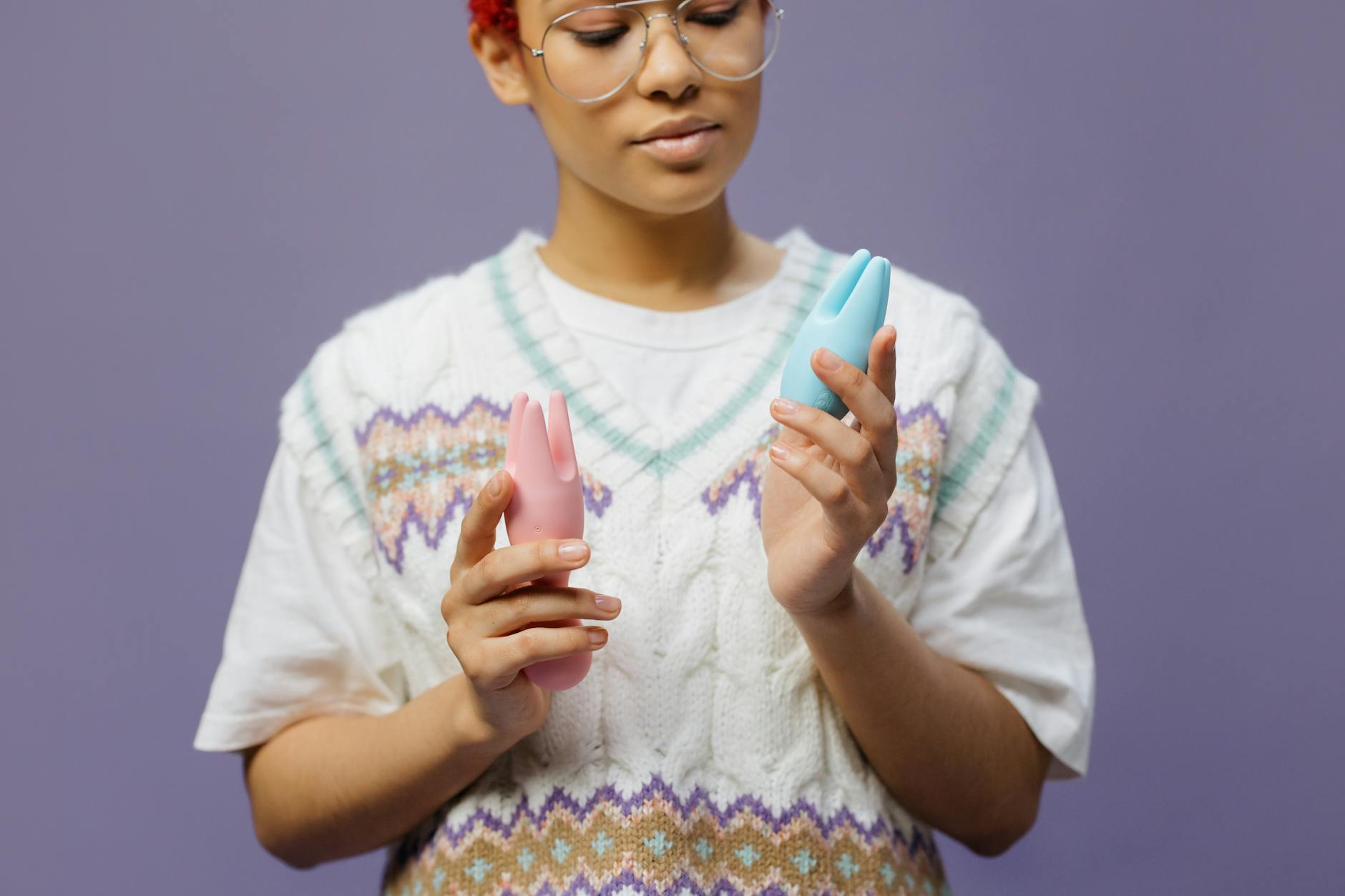
How to Use a Lemon Vibrator When Partners Have Mismatched Pleasure Recovery Timelines
One of you is coming back to sensation. The other never left. How to close the gap without frustration, comparison, or resentment. A therapist's framework.
One of you is recovering. The other is waiting. One partner is rebuilding sensation after antidepressants, trauma recovery, or a medical event. The other has been stable the whole time. And now you're trying to sync up your pleasure in real time, and it feels impossible.
Here's the pattern I see in my practice: Partner A starts medication or begins trauma recovery work. Their baseline arousal shifts down. They need longer warm-up, lower initial intensity, more patience with their own body. Partner B has been cruising at the same frequency for years. They want to help. They want to understand. But when Partner A says "slower" or "not tonight," it lands like rejection.
What's actually happening is more practical: your nervous systems are in different recovery phases. One is relearning sensation. The other is waiting for synchronization that may not happen on a predictable schedule. A lemon clitoral vibrator can bridge this gap, but only if you're using it as a tool for communication, not for "fixing" the mismatch.
The suction mechanism in air-pulse devices like the Lem works differently than traditional vibration. This matters when you're on different timelines because it doesn't require the same intensity ramp-up. You can start gentle, layer in sensation gradually, and pause without losing the moment. That flexibility is what makes it useful for couples where one person is recovering and the other is present.
Timeline 1: Sensation recovery. This is how fast your body relearns pleasure signals. If you're coming off antidepressants or healing from trauma, this can take weeks or months. Your partner's timeline might be days or already complete. You're not broken. You're on a different curve.
Timeline 2: Emotional readiness. You might physically be capable of pleasure but emotionally exhausted. Or vice versa. One partner might need to feel emotionally connected before pleasure is even possible. The other might use pleasure to create connection. These can be wildly out of sync.
Timeline 3: Novelty and desire. The partner who's been stable might be craving novelty or intensity. The recovering partner might need simplicity and repetition. Introducing a lemon vibrator (or any new toy) onto a mismatched timeline can feel like pressure to "perform recovery" faster than your body allows.
First: agree that you're using it for exploration, not performance. That distinction changes everything. You're not trying to "catch up" or "prove" you're healing. You're gathering information about what your body can do right now.
Start with a conversation that doesn't happen during sex. I recommend this over coffee, not in bed. One partner says: "I'm interested in exploring this together. But I need you to know my timeline for recovery might be different from yours. That's not rejection of you. That's my nervous system." The other partner responds with what they actually need: "I want to feel connected to you. I don't need intensity. I need to feel like we're doing this together."
Once that's clear, here's the practical architecture.
The recovering partner uses the lemon vibrator solo first. Not as homework. As exploration. You're learning what patterns feel good, what intensity you're ready for, how long your body needs to build arousal. A lemon clitoral vibrator in its lower settings (patterns 1-3) is ideal because the sensation builds gradually. You're not chasing orgasm. You're noticing what's available.
Then, introduce it together. One partner holds it. The other receives. Crucially: the person recovering gets to say stop whenever. Not "when you're done." Whenever. If your nervous system says "that's enough," you pause. No negotiation. This builds trust in your own body and trust in your partner.
Mismatched timelines create resentment when one person starts keeping score. "I waited for them." "They made me slow down." Neither is wrong. Both are exhausting.
I tell couples: agree on what success looks like before you start. Success might not be synchronized orgasms. It might be "we both feel like we're on the same team." Or "they felt seen." Or "I got my body back." Get specific. Write it down if you need to.
When the recovering partner uses a lemon vibrator with their partner present, success might look like: "I enjoyed this without feeling rushed." For the stable partner, it might be: "I felt like I was part of something, not waiting on the sidelines."
Those are different wins. And they can both be true.
Traditional vibrators (wand, bullet, rabbit) work on one principle: intensity from speed. You need a partner who can calibrate that constantly. The recovering person says "less," you dial down. But psychological anxiety can spike without warning, and suddenly "less" isn't less enough.
Suction-based clitoral vibrators work differently. The stimulation comes from air-pulse waves, not mechanical vibration. You can stay on a low pattern for longer and still feel progress. The sensation is gentler to rebuild with. And for the partner watching, it's less of a technical balancing act. You're not adjusting a dial every thirty seconds. You're present.
This is why many couples find lemon sexual toys more collaborative for recovery work than traditional vibration. The suction mechanism slows the pace down naturally.
If one partner is recovering from significant trauma, a sex therapist matters. Not because there's something wrong with you as a couple. But because trauma recovery has specific protocols. A lemon vibrator is a tool. A therapist helps you hold it together while deeper work happens.
If medication changes are causing persistent loss of desire, talk to your doctor. Some medications have alternatives. Some don't. Some people thrive on lower-dose options. These are conversations that belong in a clinical setting, not in bed trying to figure it out.
If one person resents the mismatch after three months of honest effort, couples counseling helps. Not because the relationship is failing. But because resentment is how you know you need a third voice.
Your pleasure isn't supposed to match your partner's on a timeline. Sometimes you're the one rebuilding. Sometimes they are. Sometimes you're both on different curves, and that's not a failure. That's partnership.
Using a lemon clitoral vibrator together during mismatched recovery isn't about "catching up." It's about staying connected while you both change. One partner rebuilding sensation. The other rebuilding trust in patience. That's the deeper work. The vibrator is just the conversation starter.
Your pleasure recovery timeline is yours. Not theirs. And the right partner knows the difference.
How long does it actually take to recover pleasure after antidepressants?
This varies wildly. Some people notice shifts within weeks of stopping medication. Others take months. Your body isn't broken if it takes time. Sensation pathways can get "quiet" on certain medications and need slow reactivation. A lemon vibrator helps because you can practice very gentle stimulation without pressure to perform. The pattern and pace you choose matter more than the device itself.
My partner recovered faster than I did. They want to use toys with me, but I feel pressured. What do I do?
That pressure is real information. Say it out loud: "When we introduce this now, I feel like I'm being asked to perform recovery on your timeline." That's not rejecting them. That's setting a boundary you actually need. If you're not ready for partnered exploration, stay with solo use. Bringing a toy into partnered sex before you're ready doesn't speed up your recovery. It adds performance anxiety on top of the recovery work you're already doing. Your body will tell you when you're ready.
Can a lemon vibrator help if only one of us wants to use toys?
Absolutely. One partner using a lemon clitoral vibrator during partnered sex while the other uses hands, mouth, or other stimulation creates asymmetry. That's fine. What matters is that you're both consenting and communicating. "I want to explore this solo, but I want you to be part of that exploration" is different from "I want to use this and pretend you're not here." The distinction changes how it lands.
What if my partner's recovery feels like it's taking too long and I'm losing patience?
That's fatigue. After weeks or months of patience, you run out. That's human. The solution isn't a toy. It's probably a therapist who can help you both name what's actually happening. One person recovering always impacts the other. You don't have to pretend it doesn't. You just have to decide if you're in this together or not. A couples counselor helps you have that conversation outside the bedroom.
Is it okay to set a "deadline" for when my partner should be recovered?
No. Here's why: you can't negotiate a nervous system. But you can negotiate what you need to feel connected while they're recovering. That's different. "I need us to have fifteen minutes of non-sexual touch three times a week" isn't a pressure tactic. "You need to be able to orgasm by March" is. Know the difference.
Can lemon adult toys help us feel more connected if we're on different timelines?
Yes, if you're using them as a communication device, not a performance device. When you're exploring together (with the recovering partner in control of intensity and timing), you're saying "I trust you with this." That's intimate. The toy becomes part of that conversation, not the main event.
Mismatched pleasure recovery timelines expose what's real in a relationship. Patience that turns into resentment. Desire that's conditional on performance. Presence that disappears when it gets inconvenient. These aren't toy problems. These are partnership problems.
A lemon vibrator can facilitate honesty. It can create space for gentler reconnection. It can make recovery feel less isolating. But it can't fix a dynamic where one person is unwilling to meet the other where they actually are.
If you're using a lemon clitoral vibrator during this season, you're already doing the brave work: staying together while you change. That matters.
Want more support navigating partnership during recovery? Reach out. We work with couples on exactly this.