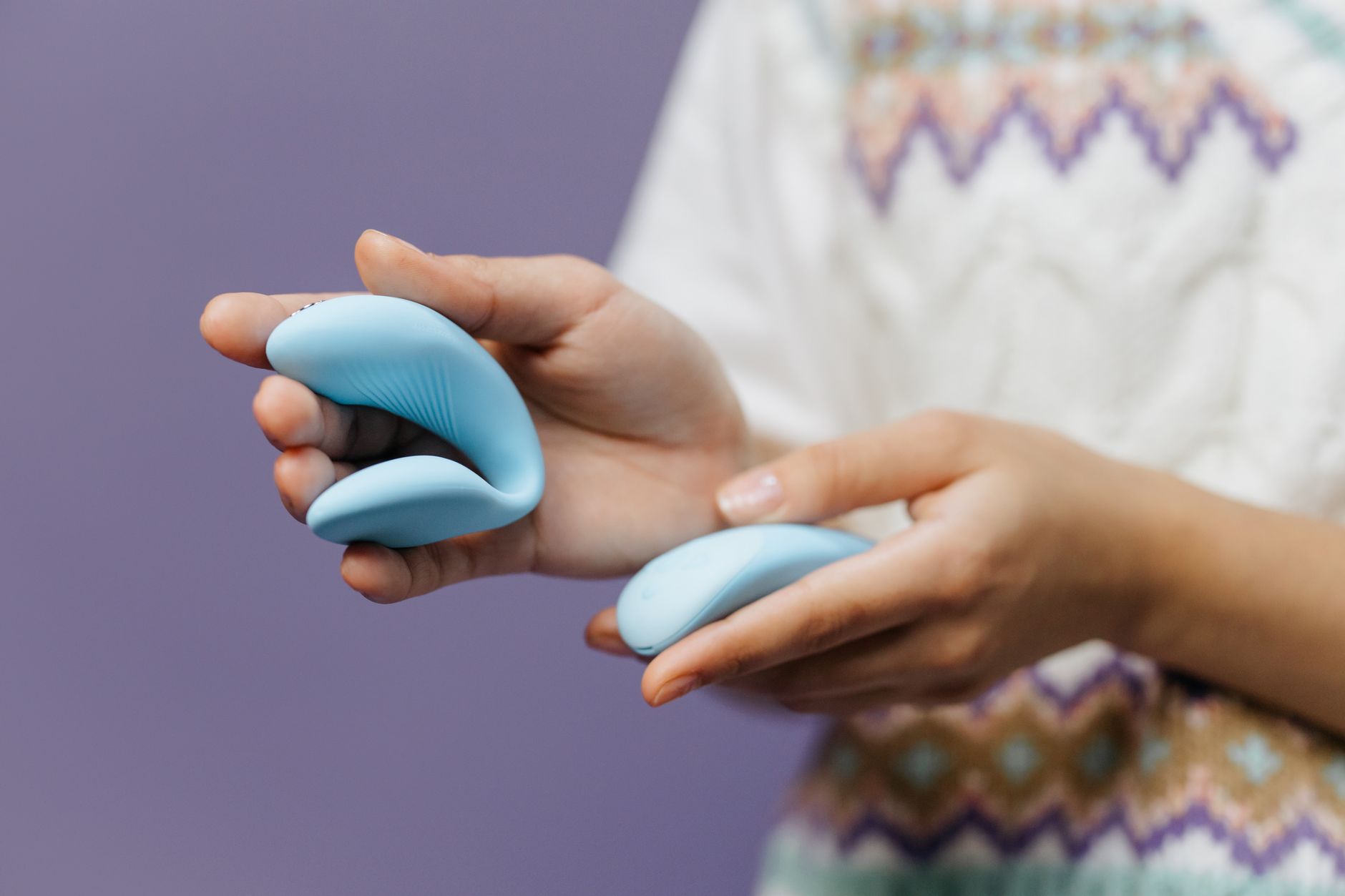
Why Lemon Vibrators Feel Different After Stopping Birth Control
Your hormones just rewired. Your pleasure sensitivity shifted. Here's what's actually happening when you quit the pill, and why your lemon clitoral vibrator suddenly feels completely new.
You stop taking the pill for a reason. Maybe your body asked for a break. Maybe you switched to a different method. Maybe you just needed to feel like yourself again. What nobody mentions is that pleasure doesn't stay the same when you stop. Your clitoral vibrator might feel weaker, stronger, or wildly different. That's not broken. That's your nervous system recalibrating.
For years, synthetic hormones have been dampening dopamine, tweaking your blood flow, and quietly reshaping how your body responds to touch. When you stop, those changes don't reverse overnight. They rewire. And that rewiring can make lemon vibrators, lem vibrators, or any clitoral vibrator feel like you're using something completely new.
Hormonal birth control works by flooding your system with synthetic estrogen and progestin. Here's what that means for sensation and desire.
These hormones suppress your natural testosterone production. Yes, people with vulvas produce testosterone, and yes, it matters for desire. It's not a small factor. It's a major driver. When you're on the pill, testosterone drops by up to 60 percent. That's not subtle. That's a fundamental shift in how your nervous system responds to stimulation.
Synthetic hormones also affect serotonin and dopamine. Some people feel emotionally smoother on birth control. Others feel flatlined. Both are real. The pill literally changes the neurotransmitters involved in motivation, reward, and pleasure. When you're taking it, your brain is operating under different baseline chemistry.
Blood flow changes too. Synthetic hormones can reduce blood flow to the genitals, which means less engorging during arousal, slower response times, and sometimes a muted orgasm. Your tissues are still capable, but it's like the signal is traveling through a narrower pipe.
Your body doesn't flip a switch when you quit. Hormone levels don't reset to baseline instantly. This is why the first few months feel so strange.
Week one to two: Not much changes. Synthetic hormones linger in your system. You might notice mood shifts or a slight uptick in energy, but pleasure sensation usually feels the same as it did on the pill.
Week three to eight: This is when things get weird. Your natural testosterone is climbing back. Estrogen is fluctuating. Your pituitary gland is remembering how to do its job again. Some days you feel hypersensitive. Some days nothing registers. This is completely normal, and it's temporary. Your nervous system is relearning.
Month three onward: Most people stabilize here. If you're using a lemon vibrator or any clitoral vibrator from Official Hello Nancy, you might notice that the settings that felt right on birth control now feel too intense. Or they feel too weak. Your baseline has shifted, and your pleasure tolerance has recalibrated.
If you've been using a lem vibrator on the pill, you know exactly what intensity feels right. Then you quit, and suddenly it's either jarring or disappointing.
Too intense: More testosterone means more nerve sensitivity. The suction patterns that felt pleasant before now feel sharp or overwhelming. Your tissues are more engorged, more reactive, and the sensation is amplified. This is actually a good sign. It means your body is waking back up. You just need to start on lower settings and work your way up again.
Too weak: This happens less often after stopping, but it can happen if you had no baseline desire while on the pill and your testosterone is still climbing. Your nervous system is asking for more input to register pleasure. Give it time. Also consider that you might need longer warm-up time. Coming off birth control doesn't instantly restore what the pill dampened. It takes weeks for your entire arousal chain to relearn its rhythm.
Unpredictable: Some days the lemon sucker vibrations feel perfect. Some days they don't register. This is the hormone fluctuation talking. You're no longer taking a daily dose of synthetic hormones that keep everything flatlined. Your natural cycle is returning, and with it, pleasure intensity shifts across the month. That's normal. That's your real body.
Birth control alters dopamine, the neurotransmitter responsible for reward, motivation, and orgasm intensity. When you stop, dopamine receptors can take months to fully recalibrate.
This means that orgasms might feel less intense at first. Or you might orgasm more easily. Or it might take longer to build to orgasm. None of these are permanent. This is your dopamine system remembering how to function without synthetic hormonal suppression.
The lemon clitoral vibrator from Official Hello Nancy works by stimulating thousands of nerve endings through gentle suction. That suction triggers a cascade of neurochemical events, including dopamine release. If dopamine is in transition, your experience with clitoral vibrators will feel different. This is not a reason to stop using them. It's a reason to use them mindfully and notice what's actually happening.
Many people report that orgasms feel more intense three to six months after quitting hormonal birth control. The pleasure doesn't disappear. It just takes a moment to return to full strength.
First, start lower than you think you need to. If you were using pattern four on your lem vibrator before, try pattern two. Build slowly. Your sensitivity is in flux, and jarring intensity might actually suppress arousal rather than encourage it.
Second, extend your warm-up time. Give yourself 15 to 20 minutes to get aroused before you reach for the lemon sexual toy. Your blood flow is recalibrating too. Rushing won't help.
Third, use water-based lubricant even if you're naturally lubricated. Synthetic hormones often kept you in a baseline lubricated state. Coming off them means your lubrication is more responsive to actual arousal, not a background hum. Extra lube bridges that gap and makes the experience more comfortable while your body relearns.
Fourth, pay attention to where you are in your cycle. If you're off hormonal birth control, you're menstruating again (or cycling if you don't menstruate). Your pleasure sensitivity will peak around ovulation and dip before your period. This is not a bug. It's a feature. Use it. Some people find the lemon clitoral vibrator feels incredible mid-cycle and prefer different stimulation before their period. Honor that.
Pleasure shifts after stopping birth control are expected. But there's a difference between "my orgasms feel different" and "I have no sensation at all." Know the line.
Expected: Fluctuating pleasure intensity, changes in orgasm timing, needing higher or lower settings on your lemon vibrator than before, longer warm-up time, emotional shifts. These all normalize within three to six months.
Worth mentioning to a doctor: Complete numbness that doesn't improve by month four, pain during or after using clitoral vibrators, loss of desire that doesn't return as your cycle stabilizes, or mood changes so severe they affect your daily life. Birth control can unmask underlying conditions. If something feels wrong after three months of stabilization, talk to someone.
Also worth knowing: Some people feel dramatically better off hormonal birth control. Clearer, hornier, more responsive. Others feel neutral. Others initially feel worse and then improve. There's no "right" response. Your body is individual.
If you're in a relationship, your partner might notice the change too. You might want penetration or touch differently. Your desire might come back stronger. You might need more foreplay. You might want to explore solo pleasure again.
This is a moment to communicate without shame. You're not broken or suddenly difficult. Your body is recalibrating. That's worth naming. Many couples find that coming off hormonal birth control actually deepens intimacy because both partners have to renegotiate what pleasure looks like. It's not automatic anymore. It requires attention.
If you're exploring solo pleasure with lemon vibrators or other adult toys, that exploration is part of the recalibration too. Learning what your body wants off the pill is learning who you are again.
Three to six months is the typical window. Hormone levels stabilize faster than dopamine and nerve sensitivity, so you might feel like yourself emotionally by month two but notice pleasure shifts continuing through month four or five. The timeline varies wildly. Some people notice changes within weeks. Others take months. Both are normal. If something hasn't shifted by month six, it's worth checking in with a doctor.
Absolutely. There's no medical reason to stop. Just be gentle with yourself. Start on lower settings, use lube, and listen to what your body actually wants rather than what you remember wanting on the pill. The lem vibrator and other clitoral vibrators from Official Hello Nancy are designed to work with your natural responses. If your responses are shifting, adjust accordingly.
Many people report this, but not everyone. Some people's orgasms return to baseline. Some people's feel stronger. Some feel different but not necessarily more intense. The intensity depends on your individual neurology, dopamine sensitivity, and how the pill affected you specifically. Focus less on "stronger" and more on "more present." Off birth control, many people describe feeling more connected to their orgasms, even if the intensity itself is similar.
Non-hormonal methods like copper IUDs have zero impact on dopamine or testosterone. You might feel a difference immediately, especially a return in desire and sensation. Hormonal IUDs release progestin locally but in much smaller doses than the pill. You'll likely feel some changes, but less dramatic than stopping hormonal contraception entirely. If you're switching methods, give yourself two to three months to notice how the new method affects your pleasure before deciding if it's right for you.
That's your call. Some people prefer to give their partner a heads-up: "My body chemistry is changing, so pleasure might shift for a few months." Others experience the changes privately and only mention them if pleasure diverges significantly from what they shared before. There's no wrong answer. The key is avoiding a situation where your partner assumes something's wrong with the relationship when really your testosterone is rising back to normal levels.
Yes. Synthetic hormones often mask anxiety. Coming off them can unmask it. This is also usually temporary. Some people feel anxious for a few weeks and it settles. Some need a few months. If you're noticing severe anxiety that's affecting your pleasure or daily life, talk to a therapist or doctor. Birth control can mask underlying anxiety, but it can also suppress it legitimately. If anxiety is new and intense after stopping, that's worth professional attention.
Coming off hormonal birth control is a full-body event. Your hormones reset. Your dopamine recalibrates. Your pleasure sensitivity shifts. This is all temporary, even when it feels permanent.
Lemon vibrators, lem vibrators, and all clitoral vibrators work brilliantly during this transition if you adjust your expectations and settings to match where your body actually is, not where it was on the pill. Use lower intensities. Extend your warm-up. Notice what changes week to week. Your pleasure is recalibrating too, and that's something worth paying attention to.